Knowledge Base
Claiming VAT on Your Home Battery: Rules & Examples
VAT claims, the 0% regulation, small business scheme and tax on trading income. Complete overview with concrete examples for 2026.
Patrick18 February 20269 min read
Back to blogStart quiz
The 0% VAT rule for solar panels and home batteries
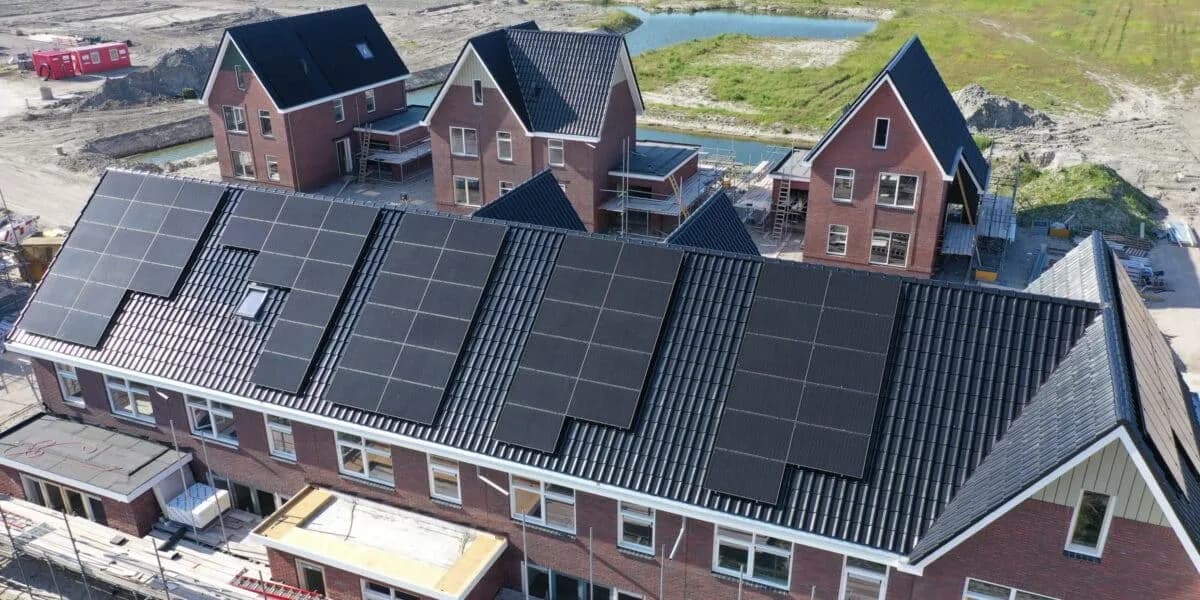
Since 1 January 2023, the Dutch government applies 0% VAT on solar panels and home batteries. This means you pay no VAT on purchase — a saving of 21% on the total price.
The rule applies to: the battery itself, the inverter, installation materials, and labour costs. The condition: the system must be installed on or near a home with a residential function.
Claiming VAT back on your purchase
Most suppliers automatically apply the 0% rate. However, it is wise to check your invoice — especially with smaller or foreign suppliers, 21% VAT is sometimes still charged.
If you purchased your battery before the 0% rule (before 2023), or if your supplier still charged 21% VAT, you can claim this VAT back from the Tax Authority.
Scenario 1: You paid 0% VAT
You do this by registering as a VAT entrepreneur. This sounds more complicated than it is — for most home battery owners, it’s a one-time action.
Flat-rate method: the Tax Authority uses a fixed rate of €15 per kWh installed capacity per year as compensation. This is the amount you declare as turnover.
Calculation example: Claiming VAT on purchase
Below is a concrete example for a 20 kWh home battery purchased at 21% VAT:
Which home battery suits you?
Take our free quiz and find out in 2 minutes.
In the first 5 years, you reclaim €1,041 in VAT and pay back 5 × €63 = €315. Net benefit: €726. After 5 years, you can return to the Small Business Scheme (KOR) and stop filing returns.
VAT on trading income
If you earn money through your home battery (e.g., through a dynamic energy contract), VAT may apply to that income.
Scenario 2: You paid 21% VAT
There are two viewpoints in tax practice:
Calculation example: VAT on income
In practice, most home battery owners fall under the KOR (turnover under €20,000) and pay no VAT on trading income. If in doubt, consult a tax advisor.
Below is a concrete example for €1,000 annual trading income:
Small Business Scheme: opt in or out?
The KOR (Small Business Scheme) exempts you from VAT obligations if your annual turnover is below €20,000. But is that always the best choice?
You can opt out of KOR to claim VAT on purchase. After 5 years, you can re-enter KOR. This is advantageous if you paid 21% VAT on a large purchase.
Step-by-step: Claiming VAT back
Below is a concrete example of the difference:
Common mistakes
Many home battery owners make avoidable mistakes when dealing with VAT. These are the most common ones:
In some situations, it is wise to consult a professional:
When to consult a tax advisor
Disclaimer: this article is for information purposes only and does not constitute tax advice. Tax rules may change. Always consult a qualified tax advisor for your personal situation.
P
Patrick from Home Energy Solutions
Founder & certified energy advisor
Benefit from 0% VAT
All home batteries in our shop include 0% VAT. View the range or request advice.
Related Articles
Continue reading about home energy
Ready to order?
Browse our complete range of home batteries with the best value for money.