Advice
Solar Panels and a Home Battery: The Perfect Combination in 2026
Why solar panels without a battery are becoming less profitable, and how home storage maximises your own electricity use. A complete overview with figures, tables and practical tips.
Patrick25 January 20267 min. read
Back to blog
Start quiz
How do solar panels and a battery complement each other?
Solar panels on your roof are an excellent investment. But in 2026 the playing field changes drastically. The net metering scheme ends completely on 1 January 2027, meaning you will no longer receive the full price for electricity you feed back to the grid. The result? Without a home battery you lose a large part of your yield. In this article we explain why solar panels and a home battery are inseparable in 2026, and how to get the most out of your investment.
Solar panels generate electricity when the sun shines: during the day, with a peak around noon. But most households consume the majority of their electricity in the early morning and late evening. Think of cooking, the washing machine, television, lighting and charging devices. That mismatch is the core problem.
Self-consumption: what happens to your solar surplus?
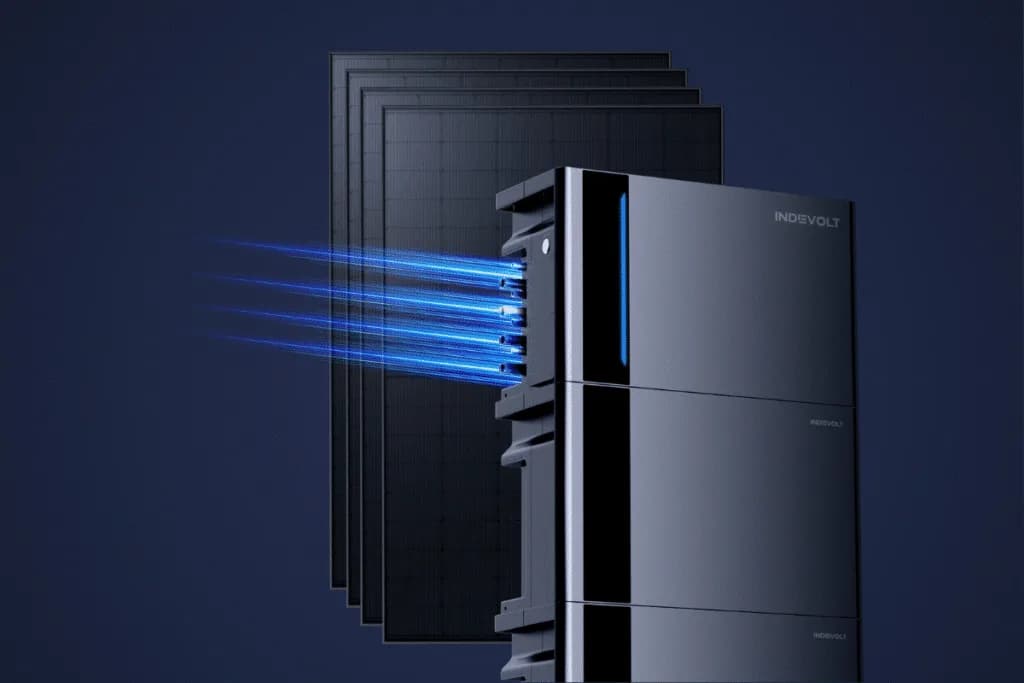
Without a battery, the surplus solar electricity during the day goes to the grid. You receive a feed-in tariff for it, but that's a fraction of what you pay for electricity purchased from the grid. With a home battery you store that surplus and use it later yourself. This way you shift your free solar electricity from the afternoon to the evening and night.
The result is simple: you buy less electricity from the grid, you feed less electricity back at a low rate, and your energy bill drops significantly. The battery acts as a buffer that bridges the gap between generation and consumption.
- Self-consumption: ~30% = 1,260 kWh used yourself
- Feed-back: ~2,940 kWh to the grid at €0.07/kWh = €206
- Grid purchase: 2,240 kWh at €0.28/kWh = €627
- Net energy costs per year: ~€421
- Self-consumption: ~75% = 3,150 kWh used yourself
The net metering scheme ends completely on 1 January 2027
Simply put: solar panels produce electricity at the wrong time. A home battery corrects that by storing the electricity until you need it. Together they form a system that can reduce your energy bill by up to 70-80%.
A crucial concept with solar panels is self-consumption (also called self-sufficiency). This is the percentage of your generated solar electricity that you use directly yourself, rather than feeding it back to the grid. The higher your self-consumption, the more you save.
| Situation | Self-consumption | Feed-back to grid | Number of panels | Generation (kWh/year) | Recommended battery | Self-consumption with battery |
|---|---|---|---|---|---|---|
| Without battery | With 5 kWh battery | With 10 kWh battery | With 15 kWh battery | With 20 kWh battery | 6 panels | 10 panels |
| 14 panels | 18 panels | 22 panels |
Which battery suits your solar panels?
Without a battery, the self-consumption of an average household is between 25% and 35%. That means 65-75% of your solar electricity goes to the grid. With a home battery, self-consumption rises dramatically, depending on the battery capacity.
As you can see, even a relatively small 5 kWh battery makes an enormous difference. Self-consumption nearly doubles. At larger capacities the curve flattens: the difference between 15 kWh and 20 kWh is relatively small. That's why it's important to choose the right size — not too large but also not too small.
Optimal battery size per number of solar panels
This is the most important point for every solar panel owner in the Netherlands. The net metering scheme ends completely on 1 January 2027. Not gradually, not step by step, but all at once. From that moment you will only receive the feed-in tariff for returned electricity, which currently sits around €0.05 to €0.07 per kWh.
Scenario 1: solar panels without battery
For comparison: the price you pay for electricity purchased from the grid is approximately €0.25 to €0.30 per kWh. The difference is enormous. Every kWh you feed back instead of using yourself effectively costs you €0.18 to €0.25 in missed savings.
- Feed-back: ~1,050 kWh to the grid at €0.07/kWh = €74
- Grid purchase: 350 kWh at €0.28/kWh = €98
- Net energy costs per year: ~€24
- Charge at low prices: your battery charges automatically when the electricity price is low (e.g. at night or when there's lots of wind and sun on the grid).
- Discharge at high prices: you use the stored electricity when the price is high (peak hours in the evening).
Which home battery suits you?
Take our free quiz and find out in 2 minutes.
Scenario 2: solar panels with 10 kWh battery
Example calculation: a household with 12 solar panels generates approximately 4,200 kWh per year. Without a battery you feed back ~2,900 kWh. At a price difference of €0.21/kWh you lose approximately €609 per year in potential savings. A home battery can prevent the majority of that loss.
- Take advantage of negative prices: with negative prices you literally get paid to consume electricity. Your battery charges for free and you even earn from it.
- Rising energy prices: the long-term trend for electricity prices is upward. The more electricity you consume yourself, the less affected you are by price increases.
- Grid congestion: the electricity grid is becoming overloaded. In more and more regions, restrictions are being imposed on feeding back. With a battery you are less dependent on the grid.
- Electrification: heat pumps, electric cars and induction cooking increase your electricity consumption. A battery helps absorb peaks and use more of your own electricity.
- Vehicle-to-Home (V2H): future integration with your electric car as extra storage is becoming increasingly realistic. A home battery and associated hybrid inverter are the foundation for this ecosystem.
Financial analysis: payback period with and without battery
The message is clear: anyone with solar panels after 1 January 2027 without a home battery is leaving hundreds of euros per year on the table. The sooner you install a battery, the sooner you benefit. And those who order now will be ready before the net metering scheme definitively ends.
A frequently asked question is: how many kWh of battery capacity do I need? The answer depends on your number of solar panels, your daily consumption and your usage pattern. The table below provides a guideline based on an average Dutch household with an annual consumption of 3,000 to 5,000 kWh.
Dynamic energy contracts and battery arbitrage
Explanation: with more panels the surplus grows larger, but also harder to fully capture with a battery. With 22 panels you produce so much electricity on sunny days that even a 20 kWh battery cannot store it all. In summer you will still feed some back. That's fine — the point is that you use as much as possible yourself in spring, autumn and winter.
A rule of thumb: choose a battery capacity equal to 60-80% of your average daily generation in spring and autumn. That's when the battery works hardest.
- Backup power: many home batteries offer a backup power function. During a power outage your home runs on the battery and solar panels — a feature that is becoming increasingly valuable.
- Choose the right capacity: use the table above as a guideline. Too large is a waste of money, too small limits your savings. Our free advice tool helps you determine the optimal size.
- Consider a hybrid inverter: if your existing inverter needs replacing, choose a hybrid inverter that controls both solar panels and battery. This saves installation costs and increases efficiency.
- Pay attention to charge and discharge speed: a battery with higher throughput (kW) can charge and discharge faster. This is important if you consume a lot of electricity at peak times, for example when cooking or charging an EV.
- Choose LiFePO4 technology: lithium iron phosphate batteries are safer, last longer (6,000+ cycles) and perform better at varying temperatures than other lithium technologies.
Future-proof: protect your solar panel investment
Enter your number of panels and consumption and receive instant personal advice on the ideal battery size.
Ready for the perfect combination?
Let's make the financial impact concrete. We compare two scenarios for a household with 12 solar panels (~4,200 kWh generation) and an annual consumption of 3,500 kWh, after the complete end of the net metering scheme.
The difference is nearly €400 per year. With an investment of ~€5,500 for a 10 kWh battery system including installation, you have a payback period of approximately 7 to 8 years. After that you save virtually your entire energy bill for years. A good LiFePO4 battery lasts 15 to 20 years, so after payback you have at least 7 to 13 years of pure profit.
8 practical tips for the perfect integration
Important: the payback period becomes even shorter if you have a dynamic energy contract. By smart-charging at negative or very low prices and discharging at peak rates, you can increase annual savings by an additional €100 to €300.
A home battery becomes even more valuable when you combine it with a dynamic energy contract. With dynamic contracts you pay the hourly spot price for electricity, which can fluctuate significantly. Sometimes electricity is almost free or even negatively priced (you get paid to consume), at other times you pay double the average.
- Install before 1 January 2027: take advantage of the net metering scheme while it still exists, and ensure your battery is operational before the scheme ends. The sooner, the more you save.
- Combine with a dynamic contract: switch to a dynamic energy contract to optimally benefit from price arbitrage. Most smart batteries support this out of the box.
- Place the battery in a suitable location: a dry, well-ventilated space with a temperature between 5 and 35 degrees Celsius is ideal. The garage, utility room or technical space are common locations.
- Request multiple quotes: installation prices can vary significantly. Compare at least three providers and pay attention not only to price, but also to installation quality and after-sales service.
With a smart home battery you automatically take advantage of this. This is called price arbitrage:
In practice, price arbitrage with a 10 kWh battery yields an average of €100 to €300 extra per year, on top of self-consumption savings. Modern battery systems like the Anker SOLIX X1 support dynamic tariff optimisation via their app, making this fully automatic.
Conclusion
Solar panels are an investment for 25 to 30 years. However, the energy market is changing rapidly. Besides the end of the net metering scheme, there are more trends that make a home battery indispensable:
Future perspective: a home battery is not a product you buy for today's situation. It's an investment that scales with your future energy needs. Whether you install a heat pump, buy an electric car or extend your home — the battery grows with you.
Discover which home battery best suits your solar panels and consumption profile. Free and without obligation.
Solar panels and a home battery are the perfect combination in 2026. With the net metering scheme ending completely on 1 January 2027, home storage is no longer a luxury but a necessity for every solar panel owner who wants to get the most out of their investment.
The figures speak for themselves: a home battery increases your self-consumption from approximately 30% to 70-80%, saves you hundreds of euros per year and pays for itself in 5 to 8 years. In combination with a dynamic energy contract the savings become even greater. And with a lifespan of 15 to 20 years, you enjoy virtually free electricity for years after the payback period.
Don't wait for the net metering scheme to end. Invest now in a home battery and protect your solar panel investment for the next 20 years.
Summary: solar panels without a battery yield significantly less after 2027. A 5-10 kWh battery increases your self-consumption to 60-80%, saves €300 to €600 per year and pays for itself in 5-8 years. Combine with a dynamic contract for even more savings. Install before 1 January 2027 to benefit maximally.
Founder & certified energy advisor
P
Patrick van Home Energy Solutions
Founder & certified energy advisor
Curious how much you can save?
Calculate your savings with solar panels and a home battery, or compare all batteries.
Related Articles
Continue reading about home energy
Ready to order?
Browse our complete range of home batteries with the best value for money.