Blog
How Jan from The Hague Saves €487 Per Year
Jan installed an Anker SOLIX Solarbank 2 Pro and now saves €487 per year. Read his story and discover how a home battery reduces your energy bill.
Patrick11 February 20265 min reading time
Back to blogStart quiz
Jan: self-employed entrepreneur with 16 solar panels
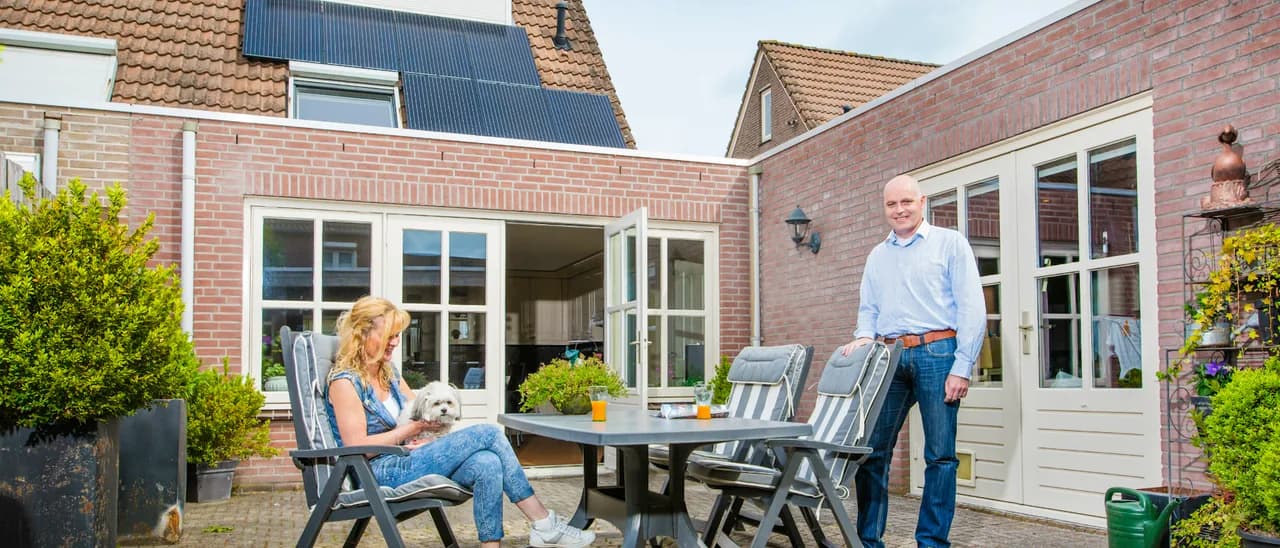
Jan (52) is a self-employed entrepreneur and lives in a terraced house in The Hague. As early as 2019, he had 16 solar panels installed on his south-facing roof. The panels delivered excellently, but there was a problem: most of the power generated went back to the grid.
"I often work with customers during the day, so our house uses little," says Jan. "The washing machine, dishwasher and oven only run in the evening. The result? During the day I supplied 60% of my generated electricity back to the grid. With the abolition of the netting scheme in sight, I knew: this had to change."
The search for a home battery
Jan started looking into home batteries. He compared several brands and models, but mainly wanted a system that he could install himself without an electrician. After reading the selection aid on the HES website, his eye fell on the Anker SOLIX Solarbank 2 Pro.
"What appealed to me was the plug-and-play concept. No hassle with a hybrid inverter, no electrician to come by. Just connect it to the micro-inverter of my solar panels and you're done."
Which home battery suits you?
Take our free quiz and find out in 2 minutes.
Installation in 2 hours
Jan went to work on a Saturday morning. The Solarbank 2 Pro was delivered by HES and was at our doorstep the next day. With the supplied manual and a YouTube video, Jan had the system up and running within 2 hours.
"I'm handy, but not an electrician. The installation was really simple. Connect the cables, set up the app, and the battery started charging immediately. My wife soon enjoyed checking the app to see how much we were saving."
Jan's numbers in a row:
Self-consumption: from 40% to 85% | Less grid consumption: €312/year | Less feed-in loss: €175/year | Total savings: €487/year
The result: from 40% to 85% self-consumption
After three months of measuring, the result was convincing. Where Jan previously only used 40% of his solar power himself, this increased to 85% self-consumption. The battery stores the surplus during the day and returns that power to the household in the evening and at night.
The savings are concrete: €312 less grid consumption per year because Jan now uses his own stored electricity instead of expensive grid electricity. In addition, it saves €175 per year in feed-in loss, because it sends less electricity to the grid at the low feed-in fee.
Jan is now considering purchasing a second battery. The reason? An electric car. "We want to lease an EV next year. Then I want to charge it at night with my own solar power. With an extra battery unit I can double my capacity and charge the car largely for free."
“"I should have done it sooner. The battery pays for itself in 4 years. And after that it is pure profit."”
— Jan, The Hague
Future plans: second battery for the EV
Jan has a clear message for other homeowners: "Don't wait until the netting scheme stops. Battery prices are falling, but the savings count from day one. The sooner you start, the more you save."
Related Articles
Continue reading about home energy
Ready to order?
Browse our complete range of home batteries with the best value for money.