Innovazione
Sharing Energy with Neighbours: Community Batteria Concepts
What if you could share energia solare with your neighbours? Community batterie and postcode-area schemes make collective accumulo di energia possible. Discover the possibilities nei Paesi Bassi.
Patrick2 marzo 20267 min read
Torna al blogInizia il test
Energy sharing as a concept: from individual to collective
In the traditional energy world, elettricità is something you generate yourself, consume yourself or feed back to the grid. But a new generation of energy concepts is breaking with this individual model: collective accumulo di energia and local energy sharing make it possible for a neighbourhood or district to jointly benefit from energia solare.
Nei Paesi Bassi, several schemes and pilot projects are active that facilitate energy sharing. This article provides an overview of current possibilities, technical requirements and future opportunities.
Existing Dutch schemes for energy sharing
The Netherlands has two relevant schemes for collective energy generation and sharing.
- Economies of scale on purchase and installazione of larger batteria
- Accessible for residents without their own roof (appartamento dwellers)
- Better utilisation through complementary consumption profiles in the neighbourhood
- Potentially lower management costs per kWh at scale
Community batteria concepts: in pratica
The postcode-area scheme allows residents to jointly set up a energia solare project and share the returns through energy tax reductions. Participants do not need to live at the same address, but within the same postcode areas. The SCE incentivo (Cooperative Energy Generation Incentivo) supports this.
Quale batteria domestica fa per te?
Fai il test gratuito e scoprilo in 2 minuti.
Postcode-area scheme (SDE++ SCE)
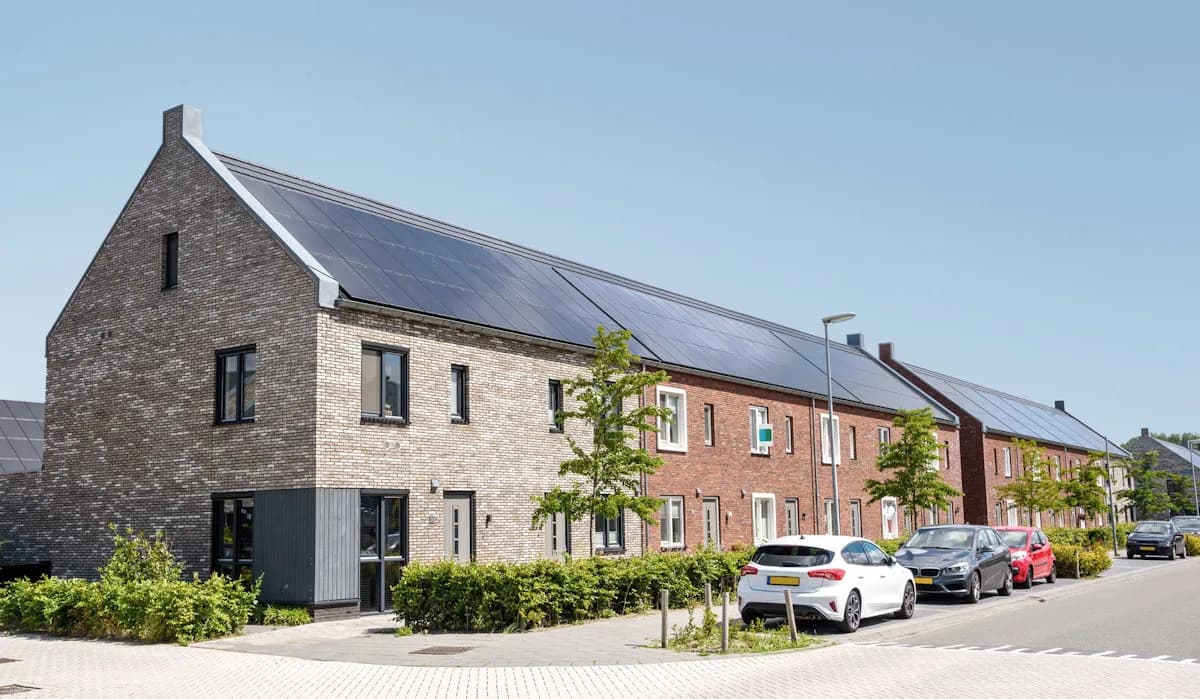
In several Dutch neighbourhoods, neighbourhood batteria pilots are active, where a central batteria stores energy from multiple homes and feeds it back on request. Examples include the ArenA neighbourhood batteria in Amsterdam and various pilots in Friesland and Groningen.
Neighbourhood batteria projects nei Paesi Bassi
Community batterie can be tecnicamente realised in several ways. The most common configurations are: a central physical batteria serving multiple homes, a virtual batteria where energy is 'stored' via the grid and returned later, and peer-to-peer energy trading via blockchain platforms.
Technical configurations for energy sharing
A central neighbourhood batteria has the following technical requirements: a allacciamento alla rete with sufficient capacità, an sistema di gestione energetica that controls distribution, metering equipment at all participating homes, and a legal framework (homeowners' association, cooperative or energy company as administrator).
| Criterio | Individual batteria domestica | Community batteria |
|---|---|---|
| Purchase price per nucleo familiare | €650 – €8,000 | €500 – €3,000 (share) |
| Decision-making | Self | Collective (HOA/cooperative) |
| Availability | Immediate (own batteria) | Via sistema di gestione energetica |
| Emergency power | Sì (con sistemi compatibili) | Rarely (grid-dependent) |
The table shows the comparison between individual and community configurations.
Advantages, challenges and future outlook
The greatest advantages of community storage are economies of scale on batteria costs, better utilisation through varied consumption profiles, and accessibility for residents without their own roof (appartamento dwellers).
- Complex legal and financial structure required
- Dependence on operatore di rete for feed-in at neighbourhood level
- Longer decision-making processes with multiple parties
- Less direct control for individual participants
Conclusion: is a community batteria right for you?
The main challenges are the complexity of the legal and financial structure, dependence on operatore di rete cooperation for feed-in contracts, and longer periodo di ammortamentos due to higher management costs.
Community batterie and collective energy sharing are promising, but nei Paesi Bassi they are still largely in the pilot and demonstration phase. For the next 5 years, the individual batteria domestica will remain the most accessible and profitable choice for most nuclei familiari. But developments are moving fast — keep an eye on the postcode-area scheme if your neighbourhood is interested in a collective project.
Want to learn more about accumulo di energia?
Whether it's an individual batteria domestica or a community project — we're happy to advise you.
Articoli correlati
Continui a leggere sul tema dell'energia domestica
Pronto per ordinare?
Scopri la nostra gamma completa di batterie domestiche con il miglior rapporto qualità-prezzo.